Client to counselor: “You don’t know the first thing about being OCD. You can’t even get the letters in the right alphabetical order.”
Client to counselor: “You don’t know the first thing about being OCD. You can’t even get the letters in the right alphabetical order.”

After I gave a talk about natural law and marriage recently, a young man in the audience remarked “That doesn’t sound like natural law.” I asked, “Why not?” He answered, "It seems so existential."
Three things emerged from our conversation:
1. He was complimenting, not criticizing.
2. He wasn’t referring to existentialism.

A few grad students deal with pressure by not doing their work, but far more deal with it by working constantly, denying themselves rest or play. Even if they become ill they keep working, which not only makes their work bad, but makes their illnesses last longer.

Yes, there are still exhilarating moments in teaching.
This week I gave students my personal end of the semester questionaire. It includes the query, “Courses like this are supposed to stretch you, so what would you say is the biggest way that you’ve been stretched?”
As you might imagine, some of the replies were encouraging, others weren’t.

We laugh at all sorts of things besides jokes. The most popular explanation is that laughter arises from the perception of incongruity. Maybe so, but I think there is more to be said.

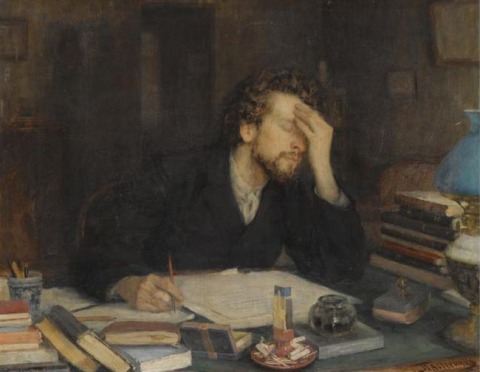
How often lately have you begun to read a novel, only to discover that you didn’t like any of the characters and didn’t care two nickels what happened to them? It’s not just that they lack admirable qualities. They even lack interesting faults.
Do the authors care about these characters? Why do they think their readers would?

The Framers of the U.S. Constitution viewed what we revile as “gridlock” or “stalemate” as a good thing, not a bad one. They assumed that most changes in the law would be bad ones. Consequently, checks and balances among the three branches of government were supposed to slow down decisionmaking and preserve the status quo.