The Underground Thomist
Blog
Drawing BlindfoldedSunday, 05-17-2015
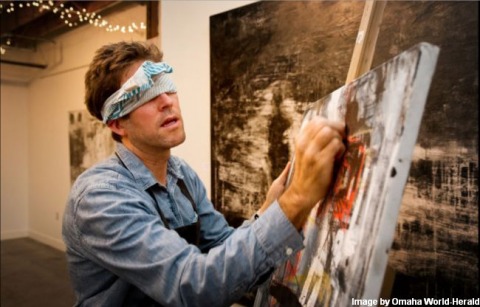
It would be much easier to agree upon the answers if only people would take the questions seriously. Not long ago, at the reception following a talk I had attended about the revival of classical architecture, I met a friendly and intelligent fellow who described himself as liberal, recognized that he was in largely conservative company, and said he was glad to chat because didn’t understand why all his liberal friends were such relativists. I thought that was promising. You won’t be surprised that the conversation turned to abortion. You won’t be surprise that he was pro. But he was intrigued to hear that once upon a time I had been pro-abortion too. What had changed my mind? he asked. I told him there had been a lot of reasons, but the first was the arbitrariness of claiming that the child is one kind of thing one minute after leaving the womb and another kind of thing one minute before. We have rights because of the sort of being that we are. So at what point did a human individual come into being? Pushing the threshold back, I told him that I hadn’t been able to find a truly fundamental change until I hit conception. Before that there isn’t a human individual, only an egg and a sperm. After that, there is. He made it rather difficult to get the argument out. The first objection came right at the beginning, when I said we have rights because of what we are. He said he didn’t want to discuss such metaphysical questions as what we are. I suggested that indecision is a form of decision – that by trying not to think about metaphysics we merely trap ourselves in bad metaphysics that we don’t know we believe. This point made no impression on him. He was a relativist, like his friends, but didn’t realize it. I asked, “But don’t you find it arbitrary to say the child has rights a minute after birth but not a minute before?” He answered, “You have to draw the line somewhere.” Tomorrow: Make It Have Consequences
|
A Dialogue on Natural Law, Part 3 of 10Saturday, 05-16-2015
You saying playing fair is a natural law. But some people don't play fair. I haven't argued that people always obey these precepts. I've only argued that they know them. If they don't always obey them, then how do you know that they know them? Because even when they don't obey them, they betray the telltale signs of guilty knowledge. For example, they make excuses. They try to convince everyone that they are playing fair and the others aren't. But if there are things we "can't not know," then how is it even possible to make excuses? People make excuses by using what they can't not know. All folk know that you ought to return a favor, so to rationalize not returning one they pretend either that they did return it or that it wasn't a favor. All folk know the wrong of deliberately taking innocent human life, so in order to rationalize murder they play games with the meaning of "deliberate," "innocent," "human," or "life." Excuses are not evidence that people don't know the natural law, but that they do. What about people who really don't know what they "can't not know?" How do you know they don't know it? Because they say they don't. Like relativists, thieves, and abortionists? Well, yes. I don't believe them. So when someone denies that he knows the natural law, your only answer is "That just proves you're in denial." Not at all. Everyone knows that it's wrong to cheat. If someone tells me that he has no such knowledge, it's true that I don't believe him. But I don't confuse denying it with "being in denial." For evidence that he really is in denial, I look elsewhere. For example, see how quickly he complains of injustice when someone tries to cheat him. Here's someone who doesn't know what he "can't not know": The cannibal. He doesn't know that he shouldn't murder. It is most unlikely that he doesn't know the wrong of deliberately taking innocent human life. What is much more likely is that he doesn't think the people in the other tribe are human. What good is it to honor human life if you don't know who is human? I didn't say he doesn't know that the people in the other tribe are human. I said he doesn't think that they are. Deep down, even the cannibal knows better. Otherwise, why does he perform elaborate expiatory rituals before he takes their lives? Suppose you're right, and people do know the moral basics. Then why is it necessary to remind them? Are you asking why moral education is necessary? All the forms of training from parental discipline on up? Yes. If we already know what moral education has to tell us, then what purpose does it serve? Moral education serves at least five purposes. It reinforces what we know, because the mere fact that we know something is wrong is not enough to keep us from doing it. It elicits what we know, because we know many things without noticing that we know them. It guards what we know, because although deep conscience cannot err, surface conscience can err in all too many ways. It builds upon what we know, because only the most general and basic matters of right and wrong are known to us immediately, and second knowledge must be added to first. Finally, it confronts us about what we know, because sometimes we need to be told "You know better." A Dialogue on Natural Law, Part 4
|
The Supreme Court, Religion, and MoralityFriday, 05-15-2015
In one of the chapters of his fine book The First Grace, Russell Hittinger points out that although the majority of the U.S. Supreme Court are badly divided about the meaning of the First Amendment religion clauses, they strongly agree about what sort of thing religion is, and they share the same general attitude toward it. Religion, in their view, is a social phenomenon which is divisive, coercive, and non-rational, and which can mean whatever an individual wants it to mean. Their attitude toward this terrible thing is just what you would expect: Extremely skeptical, and often outright hostile. Wouldn’t you be hostile toward it if you thought that is what it is? So much for the unity of faith and reason. Hittinger doesn’t say so, but the majority of the Court uses the term “morality” in the same way. For example, the notion that there might be reasons behind the ancient civilizational consensus about the nature of marriage is ignored out of existence. Any attempt to make rational distinctions in such an area is declared to be a baseless prejudice, an irrational “animus,” a project of hatred. So much for centuries of ethical philosophy. The irony of the Court’s hostility toward “morality” is that the Court does, in fact, have moral views, and relies on them constantly. It gives voice to them every time it uses ethically charged words like “ought” and “good” and “should,” without which no case could be decided. The libel about morality being baseless prejudice is hurled only against those who do have rational grounds for moral judgments. Tomorrow: A Dialogue on Natural Law, Part 3 of 10
|
A Dialogue on Natural Law, Part 2 of 10Thursday, 05-14-2015
Why do you call anything the natural purpose of anything? Why do we call steering the purpose of your car's steering wheel? Because in the first place it does steer the car, and in the second place that fact is necessary to the explanation of why the car has one. Yes, but you're talking about human nature, not a car. Yes, but we can identify purpose in the same way in human nature. New life is the chief purpose of our sexual powers, because in the first place they do cause new life, and in the second place that fact is necessary to the explanation of why we have them. But you're assuming that our nature has a design just like a car has a design. I'm not assuming anything. A forensic pathologist concludes that the wounds on the victim's body were intended. An archaeologist concludes that the object he has dug up is an artifact. An intelligence analyst concludes that the radio blips he is picking up express a coded message. Watson concludes that the symbols cut into the bark of the tree were made by Holmes to point out the trail. In each case, the investigator finds that an intelligent cause is the most reasonable inference from the pattern of the evidence. Well, I'm not a forensic pathologist. But that leads me to another problem. You say that natural law expresses the common moral sense of plain people, but plain people don't even understand these theories. Saying that plain people don't know the natural law because they don't understand natural law theory is like saying that they don't know bodies fall because they don't understand the relativistic theory of gravitation. The phenomenon is one thing; the theory which describes and explains it is another. So when you say plain people know the natural law, what exactly do you mean? That there are moral basics they can't not know, like "Play fair," "Don't murder," and "Take care of your family." I don't mean that they know theoretical propositions like "There are moral basics we can't not know" or that they could explain to you about deep conscience and design inferences. What good are the theoretical propositions, then? They guard us from certain confusions, help out in a few difficult cases, and guide moral educators. And they help to answer people like you, who don't think folk do have real knowledge of the basics of right and wrong. But they don't. There aren't any moral basics that everyone knows. Of course there are. I just mentioned three of them: "Play fair," "Don't murder," and "Take care of your family." Those are just platitudes. Everyone has his own idea of "playing fair." Does he? Try making up your own idea of what's fair -- say, "giving the greatest rewards to the laziest workers" -- and see how seriously people take you. I mean outside of government. A Dialogue on Natural Law, Part 3
|
Felons' TearsWednesday, 05-13-2015
At a conference several weeks ago, a federal judge told me that some of the defendants in his court weep -- not when they hear their sentence, which would not be surprising, but when they hear the pre-sentence report. You may be tempted to sneer. Some of these men would be considered sociopaths. Some of their records are very long. Most will return to their crimes. They were not shedding tears when they did evil. Doubtless they deserve their punishments. Yet hearing the tale of their lives and deeds overcomes them with grief. They are closer to the kingdom of heaven than the dry-eyed promoters and beneficiaries of the culture of death – the judges, educators, lawmakers, bureaucrats, pill-makers, physicians, insurance company executives, and all the rest. It was a true saying that many who are first shall be last, and the last first. Tomorrow: A Dialogue on Natural Law, Part 2 of 10
|
A Dialogue on Natural Law, Part 1of 10Tuesday, 05-12-2015
You natural law thinkers seem to be confused about whether natural law comes from God, from nature, from conscience, or from reason. There is no confusion, only a distinction. Traditionally, the authority of natural law has been found in the Creator, its content in the design He imparted to us, and the power by which we recognize it in the faculty of reason -- which is also a part of the design, and which includes deep conscience as an element. In the older natural law terminology, the first is called the "binding norm," the second the "discriminating norm," and the third the "manifesting norm." Even so, to say that something is right just because it is natural is to commit the fallacy of deriving an "ought" from an "is." No such fallacy has been committed. An "is" which merely "happens to be" has no moral significance because it is arbitrary; that's why it cannot imply an "ought." But an "is" which expresses the purposes of the Creator is fraught with an "ought" already. Such are the inbuilt features of our design, including the design of deep conscience. I notice that you've already dropped the language of the three norms. If it helps, I'll use it again. Put technically, your complaint confuses the discriminating norm with the binding norm. It treats nature as providing not only the content of the natural law but its authority. Natural law thinkers don't do that. I'm still uncomfortable with this business about "nature" and the "natural." Didn't Aristotle and many others claim that even slavery was natural? Yes, but they were wrong. It isn't. Isn't that a bit glib? Not at all. Slavery is about one being using another being merely as a means to its ends. A what may use a what, as a spider may eat a fly. A who may also use a what, as a man may eat a potato. But a who may not use a who -- and human beings are whos. The fact that we are whos, not whats, is a feature of our design, and its significance is recognized by deep conscience, which is another feature of our design. Not even God merely uses us, because He would not dishonor His image. Slavery was not my point. What I meant was that many grave moral wrongs have been committed in the name of natural law. Of course. In the name of every good evil has been done; in the name of every truth lies have been propounded. That is how sin works. Having nothing in itself by which to convince, on what other resources but good and truth can it draw to make itself attractive and plausible? We must use the natural law to recognize the abuse of the natural law; there is nothing else to use. You still don't understand me. All sorts of wrongs are natural. It's natural to fly into a rage. It's natural to murder. Don't you get it? You're mixing up two different senses of the word "natural." People do fly into rages and do murder, but the question is how we are designed. We are designed with a capacity for anger, to arouse us to the protection of endangered goods. That purpose is also an aspect of the design, so it doesn't follow that anger should be indulged to such a point that goods are endangered. Aren't we also provided with brakes? But we violate nature every time we have a cavity filled! Isn't it natural for human beings to transcend their natures? Saying that we violate the nature of a tooth every time we fill a cavity is like saying that we violate the nature of an automobile every time we plug a leak in the radiator. When we plug the leak, we are fulfilling the design by putting the car back in proper order. In the same way, filling a cavity restores to the tooth its natural function of chewing. Healing does not transcend our nature; it respects it. So you would say that aspirin, surgery to remove a tumor, and cloning "respect" nature, too. Not cloning. Why not? Doesn't it assist the natural function of having babies? Once more: Our nature is our design. We are designed to have babies, but we are not designed to have them in that way. To put it another way, our design includes not only certain ends but certain means. There is a difference between repairing the reproductive system and bypassing it. Well, it doesn't seem to be a big deal anyway. I think it is a very big deal. When you try to turn yourself into a different kind of being, you are not only doing wrong but asking for trouble. He who ignores the witness of his design will have to face the witness of natural consequences. A Dialogue on Natural Law, Part 2 |
Why Is It So Easy?Monday, 05-11-2015
Mondays are reserved for the perplexities of students. Question: If the most general principles of the natural law are at some level known to everyone, why is it so incredibly easy to disobey them? Reply: You’re onto something: Conscience tells everyone the wrong of cheating, the right of marital fidelity, the wrong of injustice – yet there is cheating, unfaithfulness, and injustice. It’s no good to pretend that we are naturally doers of evil, for isn’t conscience part of human nature too? But our hearts are divided against themselves. The law is still written on them, but we try to cover up the inscription. What is going on? I don’t think secular writers have a good answer to your question. In the Christian tradition, the answer is that although the natural law tells us the true conditions of human flourishing, we demand to have happiness on terms that make happiness impossible. This perversity has a history: From earliest times, we have wanted to be gods instead of images of God. Why should that make a difference? Because we weren’t made to function properly without Him, and He is our ultimate good. Trying to be our own gods has natural consequences, just as surely as trying to eat sand instead of food. What consequences? One is that when the mind declares independence from its maker, the passions and desires declare independence so to speak from the mind. They seem to have a mind of their own; they resist the rational direction with which they are meant to cooperate, as though the horse wanted to ride the man instead of being ridden by him. Another is that we begin lying to ourselves, trying to convince ourselves that we don’t know what we really do know, and that our wrongs are really right. Because we are rational beings, bad reasoning takes on a life of its own and drives us into further wrong acts. So what happens to conscience? It’s still working, but we have to remember that conscience has more than one mode of operation. In the cautionary mode, it alerts us to the peril of moral wrong and generates an inhibition against committing it. In the accusatory mode, it indicts us for wrong we have already done. In the avenging mode, it punishes the soul who does wrong but who refuses to read the indictment. Although many writers have tried to explain concience away, none of these efforts have succeeded. Conscience is just what it presents itself as being: An interior witness to a real law. I’ve written about some of this in an article called “The Revenge of Conscience” and a blog post called “What Conscience Isn’t.” If you’d like to know more, you can dig up my book What We Can’t Not Know: A Guide.
Tomorrow: A Dialogue on Natural Law, Part 1of 10 (and no, it won't run every single day!)
|