The Underground Thomist
Blog
If There Really Were a Natural LawThursday, 07-09-2020
“If there really were a natural law, then everyone would know it.” But everyone does. As to the idea that some people only fake it: Some certainly do fake being moral, but even to fake convincingly, they would have to have some moral knowledge. Occasionally I’m told that sociopaths merely imitate how moral people speak. That would be like scientific illiterates faking how physicists speak; they wouldn’t get away with it long. The problem with sociopaths isn’t that they don’t know even the most basic principles of right and wrong, but that they don’t care. "If there really were a natural law, then everyone would obey it.” That’s like saying that if there really were a traffic law, then everyone would obey it. The natural law doesn’t tell us what will happen, but what needs to happen, for beings of our nature. It isn’t like, say, gravity; the stone doesn’t have any choice about whether it will fall. That, by the way, is why natural law thinkers don’t call gravity a “law.” Why not? Because they think it isn’t true? No, but because a law, in the strict sense, is a rule and measure of the acts of rational beings – and gravity isn’t that.
|
Non-Hierarchical Leadership?Monday, 07-06-2020
I confess to a bias: Irrespective of what people believe or disbelieve about this or that, I like clear thinking and dislike mental fog. A woman was quoted recently as saying about the disturbances in Seattle, “I am excited about the idea of non-hierarchical leadership.” That’s fog. Non-hierarchal leadership is like a sharp sponge or a high-density vacuum. To have hierarchy is to have leaders; to have leaders is to have hierarchy. Could the woman have meant that the leaders of the excitement she had in mind were chosen democratically? No, because that was not the case. Could she have meant that the excitement took place spontaneously, without any leadership? That seems unlikely too. Even so-called spontaneous order is not really spontaneous; for example, markets depend on the rule of law. The appearance of non-hierarchy can even be a means of enforcing hierarchy. Arranging the chairs in a classroom in a circle can be a way to encourage discussion -- but it can also be a way to intimidate dissenters by making them visible. When someone speaks of “non-hierarchical leadership,” it means “I don’t know who my leaders are, and I don’t know where they are leading me.”
|
The Smartest Virus in HistoryThursday, 07-02-2020
Some scientists claim that influenza is the smartest virus in history, because it is so good at fighting off everything that physicians throw at it. Others make the same claim about the HIV virus, because it so cleverly hides from the body’s defense mechanisms, and about the Ebola virus, because it has so many ways to attach itself to cells. These claims are obsolete. The smartest virus in history is Covid-19. Think of it: A virus so sophisticated that it can tell the difference between a crowd having a street festival and a mob occupying the downtown sector of a major city. One with such good taste that it can tell the difference between fishermen in motorboats and outdoorsmen in kayaks. One so discerning that it can tell the difference between an assembly for worship and a gathering to tear down public monuments. Quietly, unerringly, with constant consideration for the scruples of our statesmen, in each of the former cases it virulently spreads itself, but in each of the latter in courteously holds back. Although this fact is not widely known among the public, the most sagacious public officials are fully aware of it, and take it into account in drafting their social distancing policies. Think of it. Already the virus seems smarter than we are. In this humble and unassuming packet of nucleic acid, we may be catching a glimpse of the next stage of life on earth.
|
Our (Non) Racist and (Non) Sexist ConstitutionTuesday, 06-30-2020
Now the cancel culture has reached the United States Constitution. A Con law professor writes in The Hill that it is time to expunge its “gendered and racist words.” Some days in the classroom, I feel as though I am trying to stuff hot air back into a balloon. I am not one of those who are angry with the language and wish to punish it, and I draw a line at the mass execution of innocent words. I work hard to teach my students to read philosophical, literary, and legal documents as they were meant, rather than from the perspective of Newspeak language fads. First the scholar writes that the Constitution “counts a slave as ‘three-fifths’ of a person.” If I had a nickel for every time a propagandized student has repeated that one to me, I would be able to endow a chair in Constitutional law myself. The number of a state’s representatives is proportional to its population. Pro-slavery delegates wanted slave states to be able to count 100% of their slaves for purposes of apportionment so that they would have greater influence in Congress. Anti-slavery delegates didn’t want slave states to be able to count slaves at all, because they didn’t think the barbarous practice of slavery should be rewarded. The three-fifths compromise was the best they could get. It wasn’t against the slaves, but for them. There are two possibilities, both equally shameful. One is that the professor does not know this. The other is that he knows it, but conceals it. Next the professor writes that the Constitution “tells us that men alone can be president, referring only to ‘he’ or ‘his’ when referring to the presidency.” Contrary to what the language police may tell us, in English, the pronoun “he” has traditionally been understood to refer to a person of either sex, except where the context clearly indicates the masculine. It is already inclusive. If the professor chooses to speak and write differently, he may do so. I wish he would extend the same courtesy to the Framers. “Imagine how schoolchildren must feel when they read the Constitution in their basic civics course,” writes the professor. “Some will be made to feel less than welcome in their own country.” They will certainly feel that way if we keep telling them whoppers about what the language means.
|
Pagan Beauty, Biblical Brutality?Monday, 06-29-2020
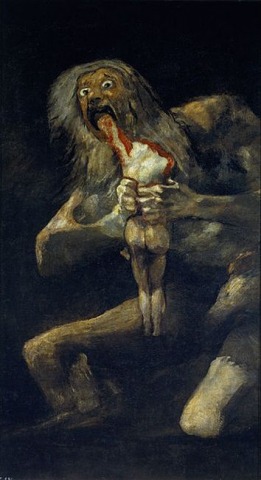
Writers often compare the beauty of the pagan myths with the brutality of the biblical story. This is doubly wrong. In the first place, the biblical chronicles are not trying to be beautiful. They are saying this is how history is when we rebel against God. You can find beauty in the Bible’s poetry, but you shouldn’t expect it in its history. In the second place, the idea that pagan religion was all charm and light is quite misleading. I suspect that those who say such things about it have read no further than the sanitized versions of Greek myths that are sometimes provided for children. Along with, yes, great beauties, pagan mythology contains fathers who devour their sons, women who conceive passion for animals, and gods who enjoy nothing more than raping mortal girls. What we find in pagan stories, we find too in pagan practice. Human sacrifice. Temple prostitution. C.S. Lewis penned a better description of paganism: “Gleams of celestial strength, and beauty falling on a jungle of filth and imbecility.” The gleams of beauty are real. So is the jungle.
|
A Note about LanguageThursday, 06-25-2020
Peaceful assembly to express opposition to an injustice is a protest. Peaceful and public violation of an unjust law is civil disobedience. Mass violation of just laws protecting persons, private property, and public property is a riot. It is a disservice to the language to call a riot a protest. It is a disgrace to the cause of honesty to call a disturbance “mostly peaceful” just because fewer than half of those involved are throwing bricks, stopping traffic, burning stores, brandishing assault weapons, or assaulting passersby.
|
Interpreting the LawSunday, 06-21-2020
Title VII of the Civil Rights Act of 1964 prohibits employment discrimination on the basis of race, color, religion, sex and national origin. Congress never had “sexual orientation” in mind, and has consistently declined to broaden the ban to include it. Recently, in Bostock v. Clayton County, the Supreme Court declared, by fiat, that the language of Title VII does include it. This on a par with saying that “I have some apples” means “I have some marbles,” or that “Close the door” means “Open it.” It isn’t interpreting the law, but rewriting it. Imagine what will now happen, say, to an elementary school that declines to employ transvestites, or an organization for the promotion of traditional sexual ethics that wants to employ only persons who accept traditional sexual ethics. We are faced with a second and more radical sexual revolution, this time attacking the very nature of human beings as men and women, undesired by common people but enforced by elites, rigidly suppressing dissenters in the name of toleration. Just to put some thoughts in order, I had composed the following reflections on the interpretation of law some months ago. I didn’t have the pending decision in mind, and wasn’t even thinking about sexuality. However, I held off posting them, not because I was waiting for Bostock, but because they seemed a little too obvious. That was a mistake. In times like these, the restatement of the obvious is never superfluous or unnecessary. ------- + -------Just how to apportion authority between legislators and judges cannot be worked out just by reasoning from the first principles of natural law; it requires prudent judgment about which constitutional arrangement will work best under one’s circumstances. For example, in ancient Israel, there was no legislature that made law; Torah was the law. What remained was to adjudicate cases. For this reason, the rulers were not called lawmakers, but judges. Israel was a special case, with divinely revealed ordinances. Most political thinkers, in most times and places, have thought it good to have one body of persons who make the law, and another body of persons who adjudicate cases. This is our own constitutional arrangement. Just so there will be no misunderstanding, let us assume that we are speaking of just law, not of unjust law, which, as St. Augustine had argued, is not a true law but rather an act of violence. Unjust enactments raise special problems that I will not consider here. Now it seems nonsensical to say that judges may adjudicate cases without reference to the law; in that case, why have legislators at all? But in order to adjudicate case according to the law, judges must know what the law means. The common sense way to understand what anyone says is to consider what he intended to convey by saying it. That applies equally to legislative enactments. I can see no reason for taking the meaning of a law to be something other than what the lawmakers intended unless the motive is not to discern but to evade what it means. “Theories of interpretation” that do propose such things are not really about interpretation at all. They are incompatible with the rule of law. Now to understand what someone intended to convey by saying something – whether what your friend intended to convey by saying “Good morning,” or what the lawmaker intended to convey by the law -- one must first consider the words that were used. Are there ever any reasons to go beyond the words? Yes. First, additional evidence of intention may be necessary if the words of the law are unclear. Second, one must construe the law with a presumption that the lawmakers intended justice and the common good. The term “justice,” here, must be taken in the traditional sense, as meaning not “what my ideology demands” but “what is due to persons.” So if one of two ways of construing the words of a law would lead to results obviously contrary to justice – for example, if it would result in penalizing the innocent while giving benefits to the guilty – then one must assume that the lawmakers would have intended the second way. Would we follow this procedure if we were interpreting the remarks of an embezzler? Of course not. But a political community is a partnership in a good life, or ought to be. Third, it might happen that doing exactly what the words of the law direct would lead to a result obviously contrary to justice and the common good in a particular case even though not in general. Thomas Aquinas illustrates this point with a law requiring that the gates of the city be kept closed. Although in general the law promotes the common good, there might be a case in which it doesn’t – for example if the enemy are pursuing the defenders of the city, so that the common good would suffer if they were not let in. The problem here isn’t that what the lawmakers intended was unclear; they intended the gates to be kept closed. But the intention of keeping them closed was for the sake of a still deeper intention, the city’s safety. So if in the emergency one were to ask them, “Do you intend us to do what you said to do?”, they would say “Certainly not!” And if there were no time to consult them, then other officials – and this includes judges – must act on that assumption. When judges do this, it is called “equitable” judgment. So we have three cases in which judges might have to consider more than the words of the law. But even in these three cases, (1) they should not treat the words of the law as more obscure than they really are, (2) they should not substitute their own judgment of what the common good requires for the judgement of the legislators themselves, and (3) they must not pretend that a given case is one of those in which even the legislators would agree that exactly following the words of the law would undermine the common good when this is actually not the case. We also have a problem if the law sketches only the broad outlines of what should be done instead of setting it out precisely. Someone has to fill in the blanks, which St. Thomas calls “determination.” The question in such a case is who has the authority to fill in the blanks. In some constitutional systems, filling in the blanks is largely left to judges and executive officials. With standing legislatures, this seems unnecessary. The discretion of judges and executive officials about how to fill in the blanks should be limited and subject to correction from the lawmakers. The fly in this ointment is that the lawmakers may be perfectly happy for judges and executive officials to exceed their remit, merely because they would rather that someone else takes the heat for controversial decisions. This poisonous motive might even be so strong as to overturn the arrangement that the constitutional framers intended. In the modern regulatory state, matters are so arranged that the legislature often sketches only the broad outlines of what should be done, then instructs other officials to make the most important decisions. Lawmakers lay out broad goals that are somehow to be accomplished, leaving it to the bureaucracy and the judiciary to decide on the means of accomplishment. But an authentic law is an ordinance of reason, for the common good, made by competent public authority, and promulgated or made known. I think the way we arrange things in the modern regulatory state violates at least two of these four conditions. Why? Because it leads to such an explosion of regulations and judicial decisions that not even the experts can keep track of all of them or figure out what they mean, and in their hidden complexity they sometimes even require contradictory things. If a body of enactments does command contradictory things, it cannot be considered an ordinance of reason. And if it is too complicated for anyone to understand, it cannot be said to have been made known. But if the enactment does violate either the first or the fourth condition, then it also violates the second, that law must uphold the common good. So perhaps the only one of the four elements it doesn’t violate is that law must be made by competent public authority. But perhaps an arrangement that cannot lead to consistent, known law should not even be regarded as competent. So perhaps a great many edicts of the modern regulatory state do not satisfy any of the criteria that make edicts truly lawful. This conclusion would not justify overthrowing the regime. One should not consider extreme measures unless one is under an extreme tyranny, and besides, it is difficult to find a way of overturning a disordered regime that does not itself violate the principles of justice and the common good. But it would certainly justify profound and determined reform.
|