The Underground Thomist
Blog
Two WrongsMonday, 07-05-2021
Justice is giving to each person what is due to him: Whatever reward, punishment, or share in common benefits or burdens he deserves. The only way to be just is to practice justice. Proclaim all you like the justice of doing injustice in certain cases, but the most careful rules for justifying injustice can never make injustice just. Today we deny this. For example, we punish persons who have done no wrong, just because of wrongs done long ago by people who may not even have been their ancestors but happen to have had the same color of skin. James did wrong, but James is dead, so let’s punish John, who looks like him. “But John enjoys good fortune that he doesn’t deserve.” Did John get his good fortune by doing wrong to someone else? If he did, take it away! But John doesn’t earn punishment merely by enjoying a blessing that Peter doesn’t. Would it be just to punish me to compensate for the fact that I didn’t deserve so good a mother as I had? If you insist on leveling, you will have to. But that isn’t justice. It’s malice. Besides, once you begin rationalizing injustice, you can never stop. If you talk yourself into committing injustice for one social goal – say, equality – then you can talk yourself into committing it for any social goal. So long as you like the result more than you dislike the accusations of your conscience, you can do anything, to anyone, for any reason.
|
Midweek QueryThursday, 07-01-2021 |
Orwell, Move OverMonday, 06-28-2021
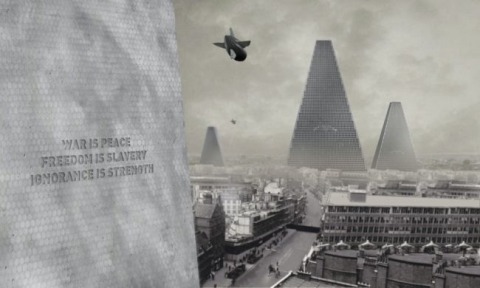
Voter suppression. Old definition: Any attempt to prevent eligible persons from voting. New definition: Any attempt to prevent ineligible persons from voting. Racism. Old definition: Treating people according to the color of their skin. New definition: Not treating people according to the color of their skin. Science. Old definition: Following the evidence wherever it leads. New definition: Discarding evidence that doesn’t fit the narrative. Judgment. Old definition: The intellectual act by which justice is recognized and enacted. New definition: A habit of bigoted people. Education. Old definition: Systematically acquiring knowledge and intellectual discipline. New definition: Systematically internalizing the attitudes of those considered smart. Hate. Old definition: Malice toward others. New definition: Disagreeing with the speaker. Virtue. Old definition: Wisdom, courage, justice, and temperance. New definition: Agreeing with the speaker. Progressive. Old definition: Having a tendency to promote changes for the better. New definition: Having a tendency to promote whatever changes the opinion-forming classes approve at the present time. Freedom of Speech. Old definition: Liberty of persuasion, argument, and discussion, with restrictions on obscenity, libel, and threats. New definition: Liberty of obscenity, libel, and threats, with restrictions on persuasion, argument, and discussion. Woman. Old definition: An adult human being of the sex opposite and complementary to a man. New definition: Fill in the blank. Related:Doubleplusgood Ducktalkers
|
The New KKKMonday, 06-21-2021
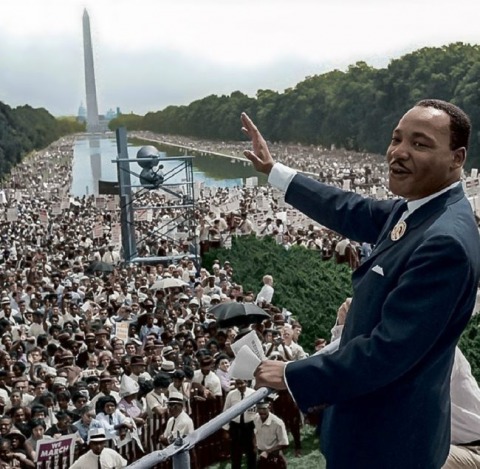
The central idea of critical race theory is “systemic racism”: That the way things work is stacked against persons of color, even if no one actually has any ill will or bias against them. Stacked against them how? We're not speaking of things like slavery or segregation. An example might be expecting college writing and speech to conform to standard English. According to critical race theory, standard English is nothing but the way white people talk. So suppose I tell my students to use their verb tenses properly. That upholds systemic racism, because I am expecting all the students to “talk white.” This sort of thing would be silly, if it weren’t so pernicious. Having a lot of different ways to speak is fine, but people who speak different ways cannot expect to understand each other unless, alongside all of them, there is also a standard way. Teaching the standard way benefits all of us by lifting us out of the little islands of our particular dialects. Not teaching it hurts all of us, but it hurts those who speak minority dialects the most. So a lot of black kids will suffer. There is more. As critical race theorists view things, not only can the system be racist even if no one has racial bias, but individuals can be racist even if they have no racial bias. For racial bias isn’t what they mean by racism. Since they see the system as stacked against black people, they also see anyone who participates in the system without protest as supporting the suppression of black people, whether intentionally or not. So I am a racist just because I do expect all my students to learn their verb tenses. To someone who thinks this way, the fact that I sincerely believe that learning standard English will be helpful to students of every color is beside the point. Not only do critical race theorists think one can lack racial bias and be a racist, they think one can have racial bias and not be a racist. Premise: All white people, just by virtue of being white, are inheritors of unfair advantages. Premise: In order to cancel out unfair advantages, one must discriminate against the people who have them. Conclusion: Discrimination against black people is racist because, by definition, black people are inheritors of disadvantage; but discrimination against white people is anti-racist because, by definition, white people are inheritors of privilege. To the new KKK who think this way, the only way to fight bad racism is good racism – except that in their topsy-turvy way of speaking, good racism isn’t racism. Where does this leave us? Equal opportunity is racist. Color-blindness is racist. Treating people of every race the same is racist. The mere act of disagreeing with these opinions is racist, because that too upholds systemic racism. There is no natural limit to such thinking. Traffic signals, botanical collections, the teaching of mathematics, the stocking of books in libraries, the practice of posting earthquake warning signs near geological faults, even Thomas the Tank Engine – all these things and more have been branded as systemically racist. In his famous speech at the Washington monument, Martin Luther King said “I have a dream that my four little children will one day live in a nation where they will not be judged by the color of their skin but by the content of their character.” To a critical race theorist, that dream was the epitome of systemic racism. I can only conclude that if MLK was a “racist,” then we need more “racists” like MLK.
|
False AlternativesMonday, 06-14-2021
Inspired by the Vice President’s approach to foreign and domestic policy, I offer these modest resolutions in her honor. I will no longer keep my door locked. Instead, I will focus on the root causes of breaking and entering. I will no longer support better training for police officers. Instead, I will focus on the root causes of violence. I will no longer favor a strong defense. Instead, I will focus on the root causes of war. I will no longer drive carefully. Instead, I will focus on the root causes of highway accidents. I will no longer teach. Instead, I will focus on the root causes of ignorance. I will no longer work. Instead, I will focus on the root causes of poverty. Finally, I will no longer vote. Instead, I will focus on the root causes of idiocy in public life.
|
Fixing DeathMonday, 06-07-2021
Natural law supports the preservation and restoration of natural function, but not its alteration or destruction: For example, it wouldn’t be good to “fix” soldiers so that they never had to sleep at all. That wouldn’t be fixing them, but ruining them. But it would be a fine thing if we could cure narcoleptics, who keep dropping off, so that they can stay awake. Transhumanists, who are sprouting from trees, might hijack this distinction to support their hopes of making people live forever. For -- they might argue -- isn’t death the cessation of function, and wouldn’t immortality be its preservation? Why not fix death too? It’s just a disease, like narcolepsy. You would think one experience of building “a tower that reaches the heavens” would be enough, but some people never learn. Can such persons be answered without appeal to divine revelation, just on the basis of natural reason? I think so. For what would it be like to live in a world without the laughter of children, or a world in which those who hold power hold onto it, perhaps, forever and forever? We don’t know of any way to have a truly human life without the rotation of the generations. In the second place, even natural reason gives us grounds to believe that we were made for something we cannot experience in this life. Endless duration in our current state would doom us to endless despair of attaining it. Finally, we don’t need the help of revelation to know that there is something wrong with us. Such as we are, death is not just a punishment, but a gift, a difficult medicine. It remedies the pride of men who, by trying to become gods, become beasts.
|
Heirs of the Stalking HorseMonday, 05-31-2021
Liberals used to be neutralists – I don’t say neutral -- toward religion. There is no such thing as neutrality, but there is such a thing as a pretense of neutrality, and neutralism is that pretense. It was never anything but a stalking horse. Except among a few useful idiots, suspending judgment about religion was always code for the judgment that traditional religious beliefs and practices must be locked up in a cage. The progressive heirs of those old neutralists are now openly and militantly at war with religion. A few still wear the neutralist fig leaf, but these days the greater number call openly for discrimination against the organized worship of God and the expression of faith in public life. Their leftist ideology also functions as a religion, but it is not a traditional religion, because its “gods” are things other than God. At this point in the argument, people worriedly ask: “If neutrality is a fraud, then in order to resist those who wish to suppress religious faith, must we go in the other direction and have a confessional state?” Not in the sense intended. But the question isn’t clearly framed. For what is a confessional state? There are several different kinds. One kind of confessional state both declares and enforces articles of faith. The Founders of our own republic rejected that kind – rightly, I think -- not because true faith in God is unimportant, but because the threat of punishments is no friend to it. But these same Founders gave us another kind of a confessional state – one that declared certain articles of faith, but did not coerce anyone to believe in them. Our founding political document, the Declaration of Independence, explicitly placed faith in God, viewing Him as the Creator, the Judge of nations, the Vindicator of the innocent, and the Author of natural law and natural rights. Yet the force of this founding creed was the pure force of persuasion. On the ancient assumption that God does not desire an unwilling obedience, no one was compelled to believe in it. During its neutralist phase, the goal of the liberal movement was yet a third sort of confessional state. The government enforced articles of faith, but never owned up to having any. For in the name of not enforcing any faith, the movement came to enforce a faith in which politically correct pieties replaced God. From declaring but not coercing, the nation went to coercing while not declaring. Now that neutralism has outlived its usefulness, the progressive heirs of old-fashioned liberalism seem to be aiming at the old-fashioned sort of confessional state – the kind that the Founders rejected, which both declares and enforces articles of faith. The difference lies in which faith they want to enforce. They call upon the power of the state to heap punishment and opprobrium on those who publicly oppose the Woke creed. During colonial times, the dissident Puritan, Roger Williams, said that enforcing faith produces not a nation of believers, but a nation of cowards and hypocrites. That may have been an overstatement, because some people do believe whatever dogma they are told to believe – in our day, the leftist one. But there are certainly a lot of cowards and hypocrites.
|