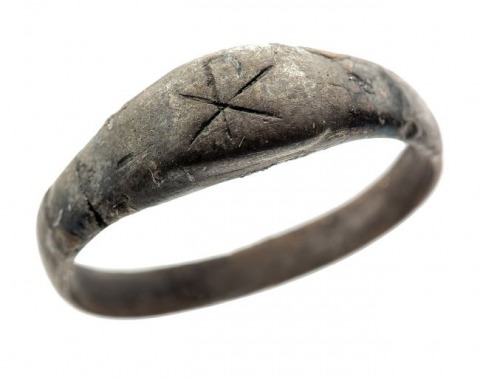
The classical writers often speak of laws being “impressed” into something or someone by some divine or human agent, as a seed is impressed into soil or the shape of the signet is impressed into wax. I think it is worthwhile to consider the various kinds of soils or waxes they had in mind. I am using the term “laws” broadly, not only for laws in the strict sense, addressed to rational beings, such as “Thou shalt not murder,” but also for patterns which are merely analogous to laws, such as the so called law of gravity. In either sense, laws are impressed --
Into inanimate things. Rocks fall to earth. Acorns aim at becoming oaks. They can’t help it.
Into the nature of the passions. Although we can resist excessive passion or stir up deficient passion, we cannot change what the passions are in their very nature. However misguided our perceptions may be, we become angry only to protect perceived good against perceived bad, never the reverse. A dog growls when you take away his bone, not when you give him one.
Into latent knowledge. Even before we are old enough to grasp abstractions, if mother asks us “How you you feel if she pinched you?”, we may grasp her point.
Into developed knowledge. That seed of knowledge grows, as all seeds do, so that eventually we do come to understand such things as the Golden Rule.
Into actual knowledge. It is one thing to know a rule, another to keep it in awareness.
Into effective knowledge, which is also called wisdom. It is one thing to keep a rule in awareness, still another to grasp how to apply it.
Into innate habit. An infant will often take the teething biscuit out of his mouth and offer it to those watching, just because the giving impulse strikes him. This habit is not true generosity, but it can be shaped and trained.
Into acquired habit. Even if we are fearful, if we resist our fear often enough, the act may become habitual. A person with such a habit is called brave.
Into acquired virtue. We must take into ourselves what to be brave about, how brave to be, on what occasions, toward what people, and for what reasons. A person with such a habit is properly called not merely brave but courageous.
Into infused virtue. Through cooperation with the grace of God, our ordinary virtues may be healed and uplifted to heights we cannot attain by ourselves. Consider the martyrs.
Into habitually infused virtue. Through the habit of cooperation with grace, we may acquire a sort of habit of receiving it. Contrast a person rowing against a strong current with a person with the wind in his sails.