Query:
My Hindu friend claims that the Bible endorses slavery. I don’t buy this for a second, but since you’ve written on the subject of the Old Testament Law, the New Testament Law, and the natural law, I would like your thoughts.
Reply:
Fortunately, since you and your Hindu friend are able to have frank conversations, you can ask him about the status of untouchables in the Hindu caste system. I would highly recommend doing so.
But in the meantime:
An old, old theme in both biblical theology and the natural law tradition is that although we should always do what we can against evils, sometimes earthly laws cannot entirely forbid them, lest imperfect men “break out into yet greater evils.” In such cases, we must look for ways to limit and to mitigate them – and if possible, gradually eradicate them -- bearing in mind the condition of the people for whom we are legislating.
For example: The New Testament forbids divorce, but the Law of Moses didn’t. Then was the Law of Moses wrong? No, Christ explains that it permitted divorce “because of the hardness of your hearts.” In other words, it wasn’t approved, but tolerated. Elucidating this passage, the Patristic writers said that if those ancient men hadn’t been allowed to divorce their wives, they would have killed them. In the meantime, even in the Old Testament, through the prophet Malachi, God says “I hate divorce.”
Again: The New Testament forbids private retribution, but the Law of Moses says “An eye for an eye, and a tooth for a tooth.” Then was the Law of Moses wrong? No, because but Torah wasn’t commanding private retribution, but limiting it. If no limit had been imposed, then angry people would have taken a life for an eye, and an eye for a tooth. Moreover, even in the Old Testament, God praises mercy as highly as justice.
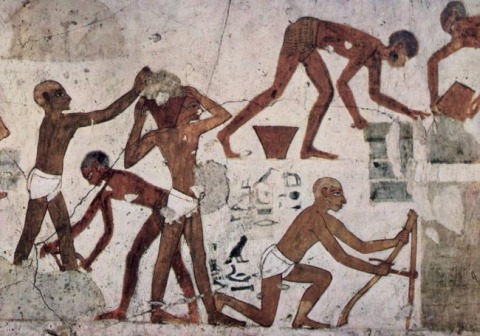
Now for to your friend’s question: The same pattern that we have just seen applies to bondservice as well. The New Testament makes clear that “in Christ there is neither slave nor free,” but even the Law of Moses, which permitted bondservice, limited it in numerous ways, for instance by requiring that bondservants be set free every seventh year. So bondservice was neither commended nor endorsed, but confined within limits.
Christians view the Old and New Testament as a whole, understanding the Old through the lens of the New. Leaving aside fixed moral precepts such as “Thou shalt not murder” and “Thou shalt not commit adultery,” the Old Testament civil ordinances were not God’s final expression of His will. They were provisional rules, meant to give the people their first lessons in holiness and to prepare them for the Gospel, which actually provides the grace to become holy as the rules command. This is why St. Paul compares Torah to what the Greeks called the paidagogos or boy-leader, the household servant who guards and conducts the children on their way to the Teacher.
NEW PODCASTS AND INTERVIEWS ABOUT MY NEW BOOK, PANDEMIC OF LUNACY:
“Anchoring Truths” podcast with Garrett Snedeker, produced by Hadley Arkes’ James Wilson Institute.
Three-part interview with me by Terrell Clemmons in Science and Culture:
Part 3, The Flocking of Crowds: The Secular University and Unstable Mass Conformism
Part 2, Motivated Irrationality: Why Even Smart People Swallow Crackpot Ideas
Part 1, Back from the Wasteland: J. Budziszewski on His Intellectual and Spiritual Journey