The Underground Thomist
Blog
Giggling into the AbyssMonday, 03-27-2017
There was a certain inevitability in existentialism’s decline, but at least the early existentialists were serious. I count four stages in the philosophy's devolution. 1. One must choose between hope and despair.Soren Kierkegaard, 1847: “To relate oneself expectantly to the possibility of the good is to hope. To relate oneself expectantly to the possibility of evil is to fear. By the decision to choose hope one decides infinitely more than it seems, because it is an eternal decision.” 2. But there is no ultimate ground for the decision.Albert Camus, 1942: “There is only one really serious philosophical question, and that is suicide.” 3. So what?Thomas Nagel, 1971: “If sub specie aeternitatis there is no reason to believe that anything matters, then that doesn’t matter either.” 4. Giggling into the abyss.Jailblimp, an absurdist promotional video, 2017: The descent of a little girl’s birthday party into bizarre and inexplicable events evokes no reaction from her except to check out her presents.
|
Thomas Aquinas’s Virtue EthicsMonday, 03-20-2017
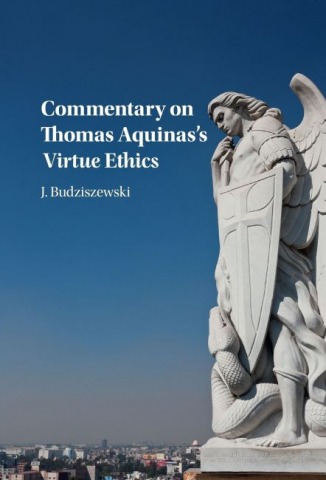
My new book, Commentary on Thomas Aquinas’s Virtue Ethics, is coming out from Cambridge University Press on April 30, and you can preorder right here. By the way, my previous book, Commentary on Thomas Aquinas’s Treatise on Law, is now available in paperback, and my Companion to the Commentary is available online for free. The book even has a trailer on YouTube. But most of you know all that already. Back to the new book. Here is the description: Although St Thomas Aquinas famously claimed that his Summa Theologiae was written for “beginners”, contemporary readers find it unusually difficult. Now, amid a surge of interest in virtue ethics, J. Budziszewski clarifies and analyzes the text's challenging arguments about the moral, intellectual, and spiritual virtues, with a spotlight on the virtue of justice. In what might be the first contemporary commentary on Aquinas's virtue ethics, he juxtaposes the original text with paraphrase and detailed discussion, guiding us through its complex arguments and classical rhetorical figures. Keeping an eye on contemporary philosophical issues, he contextualizes one of the greatest virtue theorists in history and brings Aquinas into the interdisciplinary debates of today. His brisk and clear style illuminates the most crucial of Aquinas' writings on moral character and guides us through the labyrinth of this difficult but pivotal work. And here are its contents: Part I: Moral Character in GeneralCommentary on I-II, Question 55, Article 4:Whether virtue is suitably defined?St. Thomas investigates whether the traditional understanding of virtue, derived from St. Augustine of Hippo via Peter Lombard, is correct. He considers six possible objections, concerning whether virtue is a good quality, whether it is a quality of the mind, whether it enables us to live rightly, whether it is possible for it to be employed badly, and whether it is brought about in us by God. To solve the problem, he works out the formal, material, final, and efficient causes of virtue. Commentary on I-II, Question 58, Article 4:Whether there can be moral without intellectual virtue?Can a person who lacks intellectual virtue still possess moral virtues such as fortitude, temperance, and justice? For a variety of reasons, at first it seems that this is possible. For example, common observation suggests that some people who do not reason well are morally virtuous. However, Thomas shows that although not all intellectual virtues are necessary for moral virtue, the intellectual virtues of prudence and understanding are necessary for moral virtue. Commentary on I-II, Question 58, Article 5:Whether there can be intellectual without moral virtue?The previous chapter asked whether a person who lacks intellectual virtue can still possess moral virtue; conversely, this chapter asks whether a person who lacks moral virtue can still possess intellectual virtue. St. Thomas considers a variety of reasons for thinking that this may be possible, having to do with moral development, with the similarity between moral deeds and craftsmanship, and with the common observation that some people who lack moral virtue seem to advise themselves well. He concludes, however, that although other intellectual virtues can exist without moral virtue, the intellectual virtue of prudence does require moral virtue. Taking this chapter together with the previous one, we see that neither complete moral virtue nor complete intellectual virtue is possible without the other. Commentary on I-II, Question 61, Article 2:Whether there are four cardinal virtues?According to a widely held view, all moral virtues pivot or depend on four pivotal or paramount virtues – prudence, justice, temperance, and fortitude -- sometimes called “cardinal” virtues after the Latin word for a hinge. If true, this fact would provide a much more powerful way of understanding the virtues than had been offered by the influential philosopher Aristotle -- who, after helpfully suggesting that each moral virtue is a “mean” between opposite extremes, had presented a diffuse list of twelve “means” without explaining why he listed just these twelve and not others. Responding to various objections, St. Thomas presents compelling reasons for thinking that the four virtues called cardinal surpass the other moral virtues and are, in a certain sense, their heads. The first is prudence, or practical wisdom, the bridge between the moral and intellectual virtues, which brings the power of moral reasoning to its full and proper development. The other three are fortitude, or courage; temperance, or restraint; and justice, or fairness. All of the other “acquired” virtues are associated in some way with these four (as we will find later that all of the “infused” virtues are associated in some way with faith, hope, and charity). Commentary on I-II, Question 61, Article 3:Whether any other virtues should be called principal rather than these?Some have suggested that although it is correct to think that all of the acquired moral virtues depend on a smaller number of cardinal virtues, nevertheless certain other virtues besides prudence, fortitude, temperance, and justice should also be called cardinal. Magnanimity has been proposed because it spurs great acts of every virtue; humility, because it gives firmness to every virtue; and patience, because it is through patience that the acts of every other virtue are fully carried out. Without in any way disparaging magnanimity, humility, or patience, St. Thomas argues that the fourfold list of cardinal virtues should be left as it stands. Not only are these four concerned with matters of paramount importance, but every other moral virtue turns out to depend on them. In particular, magnanimity and patience turn out to be aspects of the cardinal virtue of fortitude, and humility turns out to be an aspect of the cardinal virtue of temperance. Commentary on I-II, Question 62, Article 1:Whether there are any theological virtues?Besides the four cardinal virtues, the classical tradition had identified three “theological” or spiritual virtues: Faith, hope, and charity or love. The suggestion that we may need spiritual virtues over and above the ordinary qualities of good character is ridiculous to the secular sort of mind. Do such virtues exist? In one sense, it may seem obvious that they exist, but care is needed because the popular culture gives each of these terms different meanings than what the tradition intends. Confidence that my friend will not betray me is not the spiritual virtue of faith; optimism that I will get a raise in salary is not the spiritual virtue of hope; giving money to worthy causes is not the definition of charity; and even though the merely natural loves are good, the love called charity is different from the love of a man and a woman, the love of a mother for her child, or the love of two friends. St. Thomas shows that in their correct meanings, the three theological virtues are genuine, and that they bear the same relation to the virtues infused by Divine grace that the cardinal virtues bear to the virtues acquired by human effort. Commentary on I-II, Question 63, Article 1:Whether virtue is in us by nature?Is virtue implanted in the constitution of human beings -- does it in some sense belong to us just because we possess a human nature? The query sounds very modern: Many secular people believe that we are naturally good, and corrupted only by some disorder of social life which might perhaps be corrected by social engineering. According to Christianity, the human condition is much more complex, for although we were endowed by the Creator with a good nature, this good gift is presently in bad condition. A further complication is that although the term “natural” is sometimes used for things we do without having to learn them, it is also used for things we must learn in order to reach our full and appropriate development. In the former sense, it is “natural” to breath; in the latter sense, it is “natural” to make friends. St. Thomas responds to the query not just theologically but also philosophically, considering what it means for something to be true of us “by nature,” reviewing the history of the problem from the pre-Socratic philosopher Anaxagoras to his own time, and finally disentangling the senses in which virtue can and cannot be called natural to human beings. Commentary on I-II, Question 63, Article 2:Whether any virtue is caused in us by habituation?According to the tradition, the “acquired” virtues are brought about in us by practicing the acts which correspond to them until they become habitual. Is this true? Up to this point in his discussion, St. Thomas has assumed the habituation hypothesis to be correct; in the present chapter, he scrutinizes it to find out whether it really is. He takes up and discusses various reasons for thinking that it is false, for example the theological argument that apart from Divine grace humans can do nothing to become virtuous, and the metaphysical argument that a cause (in this case repeated acts) cannot be more perfect than its effect (in this case complete virtue). His solution depends on a distinction between virtues which are directed to the good as measured by the rule of human reason, and virtues which are directed to the good as measured by the Divine law. The former can be brought about by habituation; the latter can be brought about in us only by the work of God Himself. Commentary on I-II, Question 65, Article 1:Whether the moral virtues are connected with each other?Can we pick and choose among the virtues -- is it possible to possess some of them without the others? The classical tradition supposes that this is impossible; if you are defective in any virtue, then to some degree you will be defective in each of them, so that if you are serious about cultivating any of them you must cultivate all of them. Yet today, we often view the virtues as disconnected, saying things like “He may be a crooked businessman, but he’s good to his mom,” “Even a bad man can be a good statesman,” and “There is honor among thieves.” St. Thomas takes very seriously the reasons for thinking that the classical view is false, for example, the everyday observation that a man may perform the acts of one virtue without performing the acts of another. Ultimately, however, Thomas defeats the objections by distinguishing between fully developed virtues, and merely incipient or incomplete virtues. The former really are mutually dependent and interconnected; the latter are not. He shows that this conclusion can be reached in two different ways, depending on the precise method adopted for distinguishing among the cardinal virtues. Commentary on I-II, Question 84, Article 4:Whether the seven capital vices are suitably reckoned?Capital vices are those from which other vices arise; they are like leaders and directors of all the other vices. Just as we must practice all of the virtues to be fully developed in any of them, so we cannot let one vice into the house without opening the door wide to its brothers. The question in this chapter, however, is not so much whether certain vices should be considered capital, but which vices they are. The tradition had viewed seven vices as capital: Vainglory, envy, anger, sloth, covetousness, gluttony, and luSt. Various reasons can be offered for thinking either that this list is defective, some obvious (for example that since there are four cardinal virtues, there must be four capital vices), some not so obvious (for example that although gluttony and lust concern pleasure, and sloth and envy concern sadness, the list should also include vices pertaining to the other chief passions, hope and fear). By means of a subtle and multifaceted analysis of the psychology of sin as a distortion of the natural desire for happiness, St. Thomas defends the traditional enumeration, comparing the seven capital vices to seven generals with pride as their queen. Part II: The Virtue of Justice, Especially in Relation to LawCommentary on II-II, Question 30, Article 3:Whether mercy is a virtue?The classical tradition has considered mercy a virtue. But is it? At first it seems not. In the first place, pity, like anger, can impede deliberation. In the second place, the virtue of justice involves punishment, but mercy involves remission of punishment. Besides, even if the acts of mercy are meritorious, it might be argued that they are merely effects of another virtue, so that mercy is not a virtue in itself. In careful response to these objections, St. Thomas shows that the virtue of mercy is as genuine as the virtue of justice. Although unregulated passion may indeed impede deliberation, the virtue of mercy is neither unregulated nor a passion. Moreover, far from being an impediment to justice, mercy may actually serve the purposes of justice, provided that certain conditions are met. Finally, mercy is not merely an effect of charity, but a distinct virtue subordinate to charity, for it concerns a particular mode in which the acts of charity are carried out. Commentary on II-II, Question 58, Article 1:Whether justice is fittingly defined as being the perpetual and constant will to render to each one his right?According to a long tradition, justice is “a constant and perpetual will to give to each person his right.” In our day the expression “right” is most often used to signify a liberty to do something, for example the right to bear arms, to speak freely, or to worship according to conscience. In the classical definition of justice, however, the term is used in a much broader sense: A person’s “right” is whatever is his, whatever he deserves, whatever is properly due to him. The present chapter’s query is whether this time-honored formula suitably expresses the essence of justice. St. Thomas considers six objections, each of which targets some element in the definition. Objections One and Two deny that justice “a will”; Objection Three denies that it is “perpetual”; Objection Four, that it is both “perpetual” and “constant,” as though these words signified different qualities; and Objections Five and Six, that it “renders to each one his right.” Commentary on II-II, Question 60, Article 1:Whether judgment is an act of justice?Before I can render someone what is due to him, I have to know what is due to him. So the act of giving him his right seems to presuppose a prior act of judging what his right is. Then is judgment itself the characteristic act of justice? So it would seem, yet this answer lays us open to difficulties. For example, if judging is an act of the intellect, wouldn’t it be the characteristic act of an intellectual rather than a moral virtue? And isn’t some kind of judgment required by every virtue, not only by judgment? On the other hand, judgment seems to be what judges do. Where then does this leave the rest of us – is no one just but the judge? To complicate matters still further, it might even be said that judgment belongs neither to the ordinary person nor to the judge, for St. Paul says that judgment, in some sense, is the act of “the spiritual man.” We see then that what might at first appear to be a fatuous question – “Is judgment the characteristic act of justice?” – turns out to be a stumper. St. Thomas unravels the difficulties. Commentary on II-II, Question 60, Article 2:Whether it is lawful to judge?Human law appoints certain persons judges, but is it really right for any mere human to stand in judgment? The Objectors think that the answer should be “No”; in their view, human judgment is condemned both by natural and Divine law. In the relativistic ambiance of our own times as well, “judgmentalism” has been judged and found wanting. Yet there is a certain difficulty with antijudgmentalism, for if no one may judge others, then how is it that we may deliver an unfavorable judgment upon those who do judge others? Could it be that we have passed judgment upon judgment too quickly – or perhaps that only certain kinds of judgment are illicit? If so, which kinds? St. Thomas investigates the various senses in which human beings may and may not “judge.” Commentary on II-II, Question 60, Article 5:Whether we should always judge according to the written law?The act of judgment is the means by which justice is actualized, and justice is in turn connected with all the rest of the virtues. Normally, we should do as the written law directs, but earlier in the Summa St. Thomas has considered exceptions: (1) Under certain conditions custom can abolish written law. (2) Under certain conditions one may disobey so-called unjust laws, and may even be obligated to disobey them. (3) When cases arise which the written law was not intended to cover, those who have the authority to make the law may also suspend it. (4) In emergencies, when such cases arise but there is no time to consult authority, the citizens themselves may set aside the words of the law and follow its intention instead. Here, though, St. Thomas is not thinking of either lawmakers or ordinary citizens. Must judges follow the written law? And must they do as its very words direct, or may they sometimes set aside the words and follow its intention instead? This inquiry is not just about constitutional rules or judicial role definitions. Taken in its broadest sense it concerns how such matters are related to human moral character. Commentary on II-II, Question 60, Article 6:Whether judgment is rendered perverse by being usurped?Is justice destroyed when judgment is usurped – when a person is judged by someone who has no public authority to do so? Usurpation of judgment is judging a case without jurisdiction, seizing the power of judgment from the person to whom it belongs. However, in the present chapter St. Thomas is not asking whether it is unjust for a judge to make the sorts of judgments which properly belong to, say, the legislature; he has already established that this is wrong, because the judge must render judgment according to the law. Rather he is asking whether it is unjust for someone else to make the sorts of judgments which properly belong to the judge himself. The usurper, the “someone else,” might be another judge who has no jurisdiction in the case, or it might be someone who is not a judge at all. St. Thomas defends the traditional view that the usurpation of judgment is a violation of justice -- that judging without proper jurisdiction always destroys justice -- even if the usurper renders the correct judgment. Commentary on II-II, Question 80, Article 1:Whether the virtues annexed to justice are suitably enumerated?Although the many aspects of justice may be called “parts” of justice, they are not all “parts” in the same sense. The present chapter is about the “potential” parts of justice, meaning the secondary virtues which in some way resemble justice or are associated with it. Before St. Thomas, the thinkers who had investigated the potential parts of justice had enumerated them in a bewildering variety of ways. In the present Article, he defends the sixfold classification of Marcus Tullius Cicero against the sevenfold classification of Macrobius, the ninefold classification of Pseudo-Andronicus, the fivefold classification of “certain others” whom he does not name, and a single suggestion drawn from Aristotle. Characteristically, he does not simply discard the thoughts of all these others; whenever he comes upon a worthy insight, he works out what the writer was getting at and finds room for it in a subtler scheme to which the present chapter is merely an introduction. Commentary on II-II, Question 122, Article 1:Whether the precepts of the Decalogue are precepts of justice?The notion of some people that virtue ethics is a way of doing ethics without rules would strike St. Thomas as very strange, for the acts to which the virtues predispose us are things which we ought to do; he always connects virtues with precepts, dispositions of character with authoritative rules. In the present chapter he is concerned with the famous set of authoritative rules known as the Ten Commandments. Although they are part of Divine law, Thomas thinks they are also precepts of natural law, upheld by reason. The great question of the chapter -- whether they are precepts of justice – should be taken not in the sense “Do they have anything to do with justice?” but in the sense “Is justice is their main concern?” For according to the classical tradition, the Divine law addresses all of the virtues, not only justice -- yet in some sense the Ten Commandments specialize in the virtue of justice. What Thomas investigates is whether this view of their special concern is correct.
|
A Question for the Teachers of the ChurchMonday, 03-13-2017
Why doesn’t the social witness of the Church have more influence than it does? With respect, I suggest that perhaps one reason is that sometimes those who represent the Church speak as though they don’t believe her social doctrine. Case in point: The social doctrine of the Church distinguishes between just and unjust wars, recognizing that sometimes, as a last resort, the state must come out fighting. As the Catechism states, “All citizens and all governments are obliged to work for the avoidance of war. However, as long as the danger of war persists and there is no international authority with the necessary competence and power, governments cannot be denied the right of lawful self-defense, once all peace efforts have failed.” In the view of the Church, just war is the right and necessary use of violence against another state, by public authority, subject to rigorous moral standards, for the sake of a just peace. Why then does the highest representative of the Church declare that “faith and violence are incompatible”? I think the prisoners who were liberated from the Nazi death camps by the United States Third Army might have found it puzzling to hear that “Never has the use of violence brought peace in its wake.” Taken at face value, such statements do not simply urge working for peace, avoiding war when possible, or waging war only justly. They obliterate the very distinction between just and unjust war. They further imply that every soldier is in a state of mortal sin. Such a teaching would not be a development of doctrine; it would be a reversal or annulment of doctrine. Of course, no pope has the authority to reverse or annul doctrine, and according to a fundamental Catholic interpretive principle, papal statements should be read in continuity with what has always been held. So I do not suggest that the Holy Father does want to do this thing. But it is not unreasonable to ask why he speaks so carelessly as to give such an impression. Four years into his papacy, he speaks in this confusing way about a growing number of topics. I do not wish to exhibit anything less than respect. It could not be easy to be the Vicar of Christ, not only responsible for the spiritual direction of 1.3 billion Catholics, but also a visible symbol of the hope for unity among all Christians. I see, too, that he is seeking ways to communicate the Gospel more forcefully. Yet surely it is not too much for the faithful to ask the Church’s highest teachers to express themselves in ways that clarify the Church’s teaching instead of scrambling it. Archives
|
Castle ArchivesTuesday, 02-21-2017
Sorry, no new post until next week. In the meantime, some readers might enjoy perusing old posts in the castle archives.
|
Is Toleration a Virtue?Monday, 02-13-2017
Question:I've been back and forth in a discussion of the suggestion that tolerance is a virtue. A speaker to our community said "Tolerance is not a virtue" -- by which I understood him to mean, and readily affirmed with him, that the cultural mentality that suggests simple co-existence with those with whom one differs in belief is the essence of peace, thereby excusing moral relativism, is not manifesting the essence of virtue. Well, another member of our community approached the speaker afterwards and said, "But tolerance is a virtue!" She explained that she had shared the speaker’s understanding until she read your article from First Things, "The Illusion of Moral Neutrality," and came to understand tolerance as a virtue. And thus the debate began! I respect both her and the speaker, but I am fairly convinced that one cannot actually substantiate tolerance as a moral virtue in the scheme St. Thomas sets forth in the analysis of the virtues in the Secunda Secundae of the Summa Theologiae. But I might be wrong. The first difficulty I found in the discussion was in identifying the object of the supposed virtue of tolerance. The second difficulty I have is in identifying to which of the four cardinal virtues tolerance would rightly be allied; you have suggested a connection with prudence, but prudence is a general virtue, and so will come into play in all virtues. A third difficulty is that the things that are put forward as appropriate acts of tolerance are already parts of several other virtues, such as charity. Finally, I am concerned that you seem to suggest that untruth can be tolerated by weighing the level of evil against the evil that might result – but surely untruth is a greater evil. I wonder whether the error of proportionalism may be involved. As fellow Thomists, I presume we are both lovers of truth! I have found the whole debate with my friend to be quite ... fun! So I hope you may also find it stimulating, and not a nuisance. God bless you. Reply:My article “The Illusion of Moral Neutrality” was published in 1993, when I was very much a novice in the study of Thomas Aquinas (if indeed I will ever be more than a novice). I have written about toleration since then too, but I have never precisely identified the place of toleration in St. Thomas’s scheme of virtues, and it is long past time that I do so. To say that it is virtuous to tolerate those things which ought to be tolerated is one thing; to decide whether tolerance is a distinct virtue with matter of its own is another; and it is still another to determine to what place, or even to what places, the proper practice of tolerance should be assigned in St. Thomas’s scheme. You raise another important issue too, concerning truth. So I very much appreciate the stimulus of your thoughtful letter – I should say letters, because for purposes of this post I am condensing a series of exchanges which took place over a number of days. Besides, all this comes at a good time, because my new Commentary on Thomas Aquinas’s Virtue Ethics will be published by Cambridge this spring. We must distinguish the question of whether indiscriminately tolerating is virtuous from the question of whether properly tolerating is virtuous. I happen to know your speaker, and respect him highly. When he says toleration is not a virtue, I take him to be thinking of indiscriminate toleration, and if we take the term in this sense, he is surely right. Just as you propose, the relativistic outlook which undergirds that understanding of toleration is entirely mistaken. When I suggest that toleration is a virtue, however, I am thinking of what I have called “true” or “proper” toleration, the disposition by which we tolerate just what ought to be tolerated for the sake of the good. Like other moral virtues, proper toleration is a mean between extremes – in this case, tolerating what should not be tolerated, and failing to tolerate what should be. I first wrote about proper toleration in order to criticize the liberal, neutralist theory according to which the basis of toleration is suspending moral judgment. The neutralist view is utterly incoherent; if we really did suspend moral judgment, then we would have no way to know whether anything at all that is offensive, wrong, or mistaken should be tolerated, and if so, what. Neutralism is also a fraud, because in the name of nonjudgment, it always imposes a particular moral judgment, sparing itself the need to defend it by denying that it is a moral judgment. Thus, for example, a judge who insists that we suspend judgment between the view that marriage requires a man and woman, and the view that it does not, is in fact enforcing the view that it does not. In place of the liberal, neutralist theory, I have defended the classical theory, according to which the basis of tolerance is not suspending moral judgment, but exercising better moral judgment. I call this theory “classical” because it was proposed by diverse early Christian writers, although in recent times the Church has reaffirmed it, especially in Dignitatis Humane. Lactantius, who is speaking of religious toleration, is a good example: There is no occasion for violence and injury, for religion cannot be imposed by force; the matter must be carried on by words rather than by blows, that the will may be affected. Let [the pagan persecutors] unsheath the weapon of their intellect; if their system is true, let it be asserted. We are prepared to hear, if they teach; while they are silent, we certainly pay no credit to them, as we do not yield to them even in their rage. Let them imitate us in setting forth the system of the whole matter: for we do not entice, as they say; but we teach, we prove, we show. And thus no one is detained by us against his will, for he is unserviceable to God who is destitute of faith and devotedness; and yet no one departs from us, since the truth itself detains him. . . . Why then do [the persecutors] rage, so that while they wish to lessen their folly, they increase it? Torture and piety are widely different; nor is it possible for truth to be united with violence, or justice with cruelty.He also responds to the arguments of the persecutors themselves: But, they say, the public rites of religion must be defended. Oh with what an honorable inclination the wretched men go astray! For they are aware that there is nothing among men more excellent than religion, and that this ought to be defended with the whole of our power; but as they are deceived in the matter of religion itself, so also are they in the manner of its defense. For religion is to be defended, not by putting to death, but by dying; not by cruelty, but by patient endurance; not by guilt, but by good faith: for the former belong to evils, but the latter to goods; and it is necessary for that which is good to have place in religion, and not that which is evil. For if you wish to defend religion by bloodshed, and by tortures, and by guilt, it will no longer be defended, but will be polluted and profaned. For nothing is so much a matter of free-will as religion; in which, if the mind of the worshipper is disinclined to it, religion is at once taken away, and ceases to exist. The right method therefore is, that you defend religion by patient endurance or by death; in which the preservation of the faith is both pleasing to God Himself, and adds authority to religion.Obviously, Lactantius does not suspend judgment concerning whether there is a God or what sort of worship is pleasing to him. It is just because he does make such judgments that he concludes that true religion cannot be defended by cruelty, but only by patient endurance. Notice too that this point responds to your concern that nothing could be more important than the knowledge of the truth (especially the truth about God). About this you are entirely correct. The problem is that some means of resisting falsehood (especially violence) may injure the knowledge of the truth more than help it. Thus, proper toleration follows from love of truth, not indifference to it. Now there is a difference between saying that proper toleration is virtuous, and saying that it is a distinct virtue with its own specific matter. It might be argued that the act of properly tolerating may occur in the context of more than one virtue, so that proper toleration is not a single virtue but a sort of “portmanteau.” I take it that this is your view, and it may be true. However, it seems to me that proper toleration does have its own specific matter: Enduring rather than suppressing evil – bearing with human frailty -- just in those cases in which suppressing the evil would either cause greater evils, or do away with greater goods. So, even though proper toleration may have some relation to a number of virtues – such as meekness, which moderates anger, and charity, which moderates hatred -- we should inquire whether the matter just identified belongs to just one of the virtues already listed in the unsurpassed analysis of St. Thomas Aquinas. And I think that it does. In my opinion, the closest fit seems to be the virtue of patience, which is one of the “potential parts” of the cardinal virtue of fortitude, that is, one of the secondary virtues associated with fortitude. Just insofar as prudence executes and directs the action of toleration, the act of toleration is secondarily an act of prudence, but as you point out, toleration is not unique in this respect. My reason for locating proper toleration within patience is that the distinctive act of patience is to endure those evils which must be endured. In one of your letters you responded that that in most contexts, when speaking of patience, St. Thomas is thinking of enduring, tolerating, or bearing with evils to oneself. This is correct. But in various contexts, including the context of legislation, he also speaks of enduring, tolerating, or bearing with evils to the common good, whether natural or spiritual. I do not think it is too much of a stretch to say that when I put up with, say, insults to the truth, just in those cases in which suppression of the insult would incur even greater damage to the general knowledge of the truth, I am exercising a kind of patience. Then why speak of toleration at all – why not just speak of patience? Because enduring evils to the individual good and enduring evils to the common good are different exercises of patience, and a person who is good at one sort of endurance – say, enduring an illness -- may not be good at the other sort – say, enduring those who insult the faith. We are dealing, so to speak, with different subdivisions of the virtue of patience. Proper toleration is just one of them. Identifying proper toleration as a subdivision of patience, which is in turn a potential part of fortitude, also helps us to say what human power is perfected – brought to its full development -- by proper toleration. Fortitude in general tends to perfect the power which St. Thomas calls “irascible.” So, in a particular way, does patience, and so, in an even more particular way, so does proper toleration. The irascible power is the one that aims at “arduous” goods, good that are difficult to attain. This is the power in which such passions as hope, fear, and anger are seated. Will the virtue of proper toleration please stand up? Among the candidates for proper toleration, I don’t think the alternatives to patience are compelling. For example, although the virtue of charity has a connection with proper toleration, not every exercise of proper toleration is connected with charity, just because not every exercise of proper toleration involves supernatural goods. So just as we distinguish lower and higher forms of fortitude in general and of patience – the lower form acquired by human effort, the higher infused by divine grace -- we should also distinguish lower and higher forms of proper toleration. The higher form is related to the supernatural virtue of charity, but the latter is not. Finally, to say that in some cases goods must be weighed against evils is not in any way to embrace the error which theologians call proportionalism (and which philosophers call consequentialism). The distinctive mark of proportionalism is to deny that there is any such thing as intrinsic evil. Thus, for a proportionalist, any act whatsoever might be justified for the sake of a greater good. This we deny, because we must never do what is intrinsically evil for the sake of good. But there is a difference between tolerating an evil when the alternatives are worse, and committing an evil. I will drive my automobile to work, even though doing so involves a certain risk of unintended accident. But I will not deliberately ram other drivers, or even drive carelessly, just to get to work faster. I have enjoyed this correspondence – the fun of it is barely suggested by these brief excerpts -- and I thank you for your blessing. God bless you too.
|
Couldn’t ResistThursday, 02-09-2017
What did Macbeth say say when he saw Birnam Wood advancing on Dunsinane? “Cheese it! The copse!”
|
So Many ThingsMonday, 02-06-2017
People of my age often say "Kids are so much smarter these days than we were. They know so many things that we didn’t." They do know more “things,” just because they have the new media. But that sort of knowledge is all breadth, with no depth. Imagine trying to see one thing closely with lights strobing and flashbulbs popping in every square inch of the visual field. Imagine trying to hear one thing clearly with a brass band, a symphony orchestra, a gong, an industrial metal crusher, a pack of barking dogs, and half dozen dueling drum soloists all making sound at one time. Imagine trying to take a clean breath in a mudslide. God help them, it’s like that for them all the time. Young people in the mudslide are slower at reading, and they lose interest more quickly when they do put their hands to a book. They are less well equipped to evaluate their own opinions, and more likely to conform to the attitudes of their immediate social group. They display less ability to follow a logical argument, and they are less inclined to think that arguments matter in the first place. They do have an enormous intellectual capacity – unformed, of course, as in every generation. The great thing is to form it, not to shatter it.
|